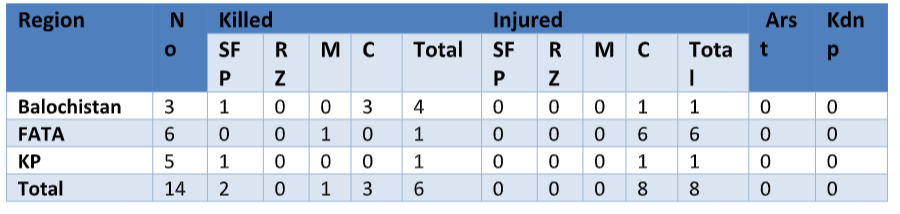
Between 1 and 4 June 2026, militant violence remained geographically dispersed across Pakistan, with 14 attacks resulting in six fatalities and eight injuries. The attacks involved a range of tactics, including targeted killings, IEDs, grenade attacks, mortar fire, infrastructure sabotage, and a failed suicide bombing attempt. The merged tribal districts recorded the highest number of incidents, while Khyber Pakhtunkhwa and Balochistan also experienced continued militant activity targeting security personnel, civilians, and critical infrastructure. Targeted killings proved the deadliest tactic, accounting for most fatalities, whereas attacks on bridges and a gas pipeline highlighted militants’ ability to disrupt local connectivity and public services. At the same time, security forces sustained counterterrorism pressure through seven reported operations, which according to official claims killed 21 militants and led to one arrest, underscoring the state’s continued focus on containing militant networks despite their persistent operational presence.
Amid persistent security challenges in Balochistan, Pakistan and Barrick Mining Corporation initiated a review of security arrangements for the Reko Diq Copper-Gold Project to assess whether additional measures and funding are required. Discussions between Pakistani authorities and Barrick focused on security requirements, procurement of advanced equipment, and financing structures, reflecting concerns about the operating environment while also underscoring the project’s strategic importance. Although Barrick reaffirmed its commitment and investor confidence appears intact, the review highlights the perceived risks surrounding the project’s implementation and the government’s effort to safeguard infrastructure and ensure uninterrupted progress.
An Ipsos survey released on 4 June indicated a sharp decline in public confidence regarding Pakistan’s economic direction, with optimism falling significantly from earlier highs in 2026. Economic concerns, inflation, rising living costs, job insecurity, and weak investment confidence emerged as the principal drivers of pessimism. While only a small proportion of respondents expressed confidence in the economy, employment prospects, or their personal finances, the survey also revealed an unexpected trend, with respondents in Khyber Pakhtunkhwa and Balochistan displaying comparatively greater optimism than those in other regions despite prevailing security and economic challenges.
To get access to the complete report, please become a subscriber. For the details of subscription click here