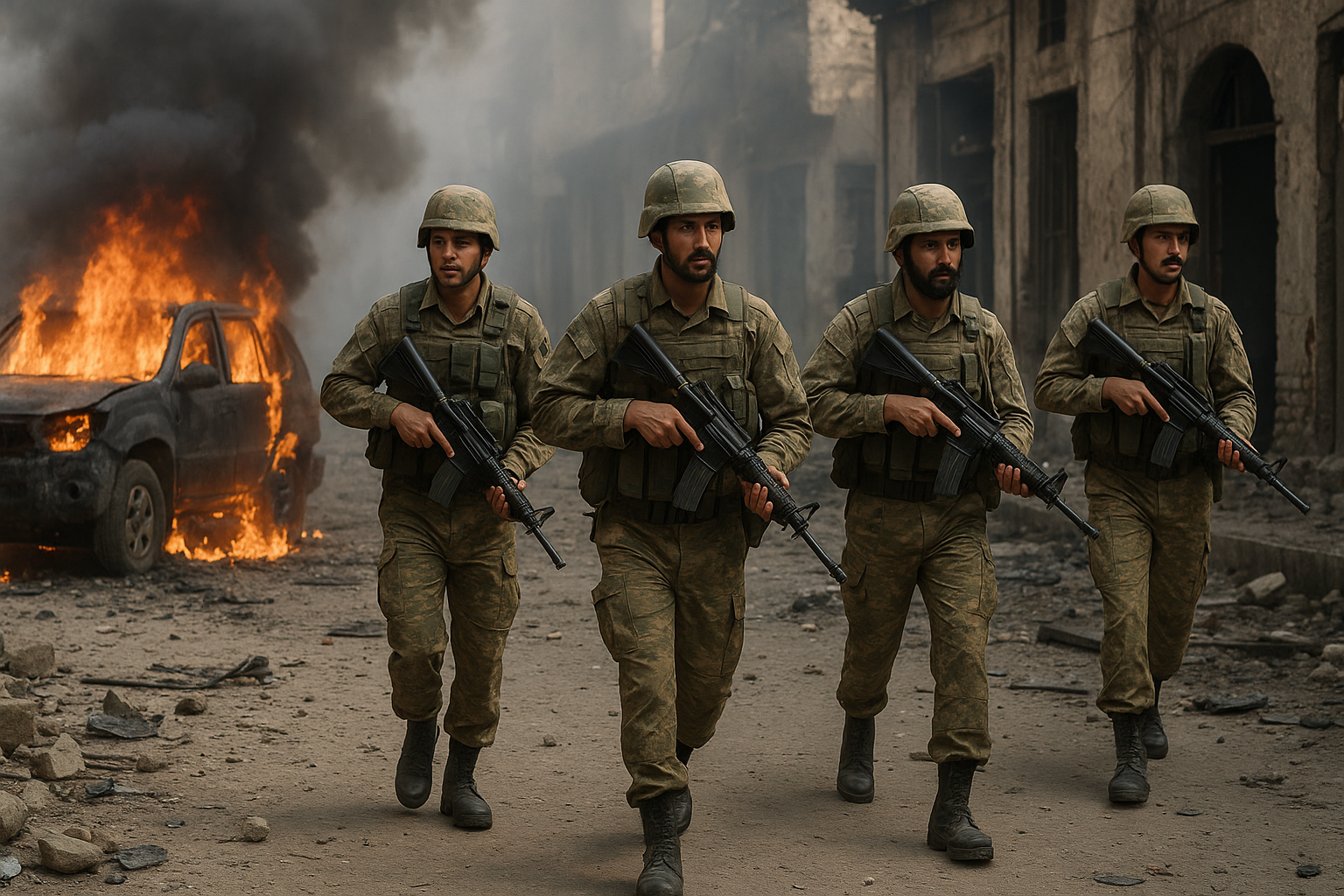
During the week, Pakistan experienced the highest number of militant attacks recorded this year, with 35 incidents compared to 31 the previous week. Despite the rise in attacks, casualty intensity remained relatively low, with 39 fatalities—including 15 security personnel— and 39 injuries. Regionally, Balochistan saw a significant surge in violence, reporting 14 attacks— a 133% increase—while erstwhile FATA recorded a 50% rise with six attacks. In contrast, Khyber Pakhtunkhwa (KP) witnessed a 47.6% decline in militant activity. The majority of attacks involved tactical assaults (13), target killings (12), IED explosions (7), and grenade attacks (3). In response, security forces conducted 13 counterterrorism operations, killing 29 militants and arresting 16.
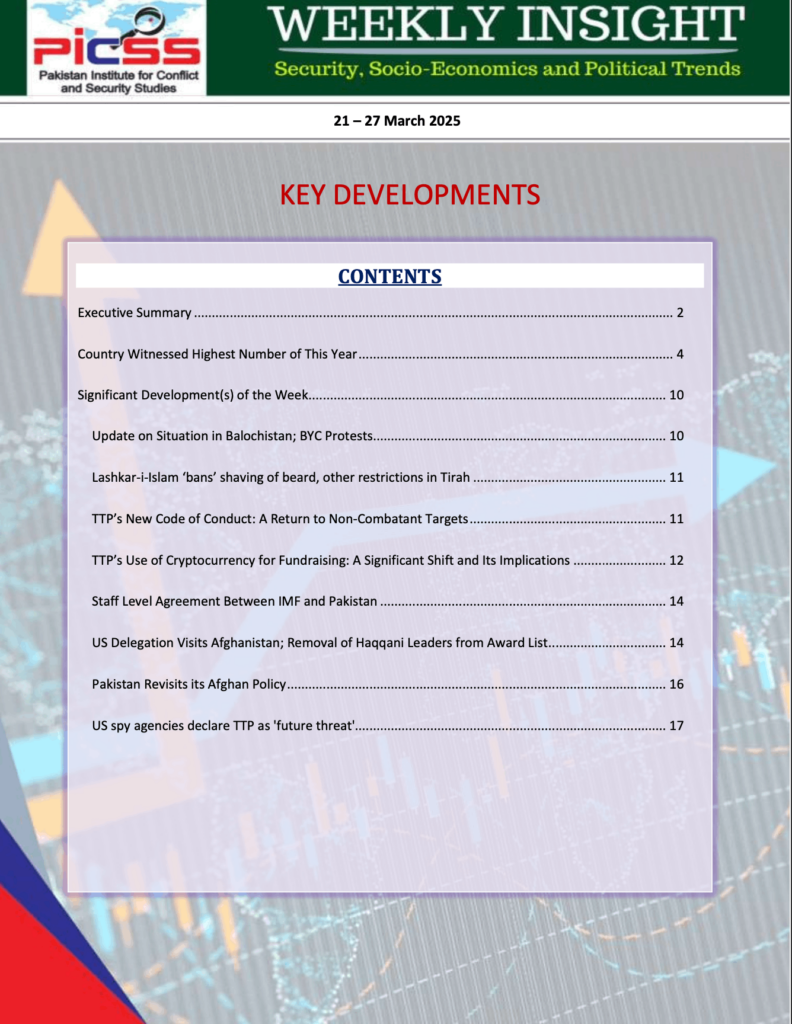
The Baloch Yakjehti Committee (BYC) protests in Balochistan, led by Dr. Mahrang Baloch, continue to escalate as both the protesters and the government refuse to compromise. The movement was sparked by the arrest of relatives of enforced disappearance victims, a longstanding issue in the province. The government’s heavy-handed crackdown—including mass arrests and terrorism-related charges—has drawn national and international criticism, with political parties such as the BNP-M, NP, and PTI condemning the repression. Protests have spread beyond Balochistan, with demonstrations in Karachi facing similar police crackdowns. Meanwhile, BNP-M’s Akhtar Mengal and NP’s Dr. Malik Baloch are considering convening an all- parties conference in Quetta to seek a political resolution, while Mengal has also announced a long march against the detentions. At the national level, discussions on Balochistan’s situation are gaining traction, with PPP Chairman Bilawal Bhutto-Zardari pushing for a more inclusive national security dialogue.
Lashkar-i-Islam (LI) has imposed strict social restrictions in parts of Tirah Valley, including banning the shaving of beards, price gouging, and certain social activities during Ramadan. A pamphlet issued by LI commander Chamthu Afridi warned barbers and shopkeepers of punitive measures if they violated these edicts. Additionally, youth have been advised to refrain from roaming unnecessarily on motorcycles, and mobile users were cautioned against storing or distributing objectionable material. The group also called on community elders to monitor local youth’s behavior, threatening punishment for any violations. Armed LI activists distributed these pamphlets and pasted them in marketplaces to enforce compliance.
Tehreek-e-Taliban Pakistan (TTP) has introduced a new General Code of Conduct that significantly broadens its list of legitimate targets, marking a shift from its previous focus on security forces. It now includes government institutions, judges, and political entities outside religious parties, signaling a return to targeting political figures—a shift evident since its January 2025 threats against PML-N. The judiciary, previously deprioritized under Mufti Noor Wali’s leadership, is once again labeled an enemy, influenced by internal pressure from Jamat-ul-Ahrar loyalists. Tribal peace committees, military-run businesses, and those accused of blasphemy or promoting obscenity are also at risk. While TTP claims it will not indiscriminately target individuals from certain sects, its conditional exceptions create space for sectarian violence. These developments suggest an imminent increase in attacks, particularly against state-affiliated entities.
The Tehrik-i-Taliban Pakistan (TTP) has openly adopted cryptocurrency for fundraising, marking a shift from traditional financing methods such as hawala networks and cash transactions. A TTP-affiliated social media channel recently released a poster soliciting donations via QR codes linked to crypto wallets, including Binance and TRX (Tron TRC20). This method offers anonymity and global reach, complicating counter-terrorism financing efforts. Pakistan, which has worked to curb terror financing under FATF scrutiny, faces new challenges in regulating and tracking crypto transactions. Strengthening crypto-monitoring capabilities, enhancing international cooperation, and implementing effective legal frameworks will be crucial in preventing the misuse of digital assets for terrorism.
Pakistan and the IMF have reached a staff-level agreement under the Extended Fund Facility (EFF) and Resilience and Sustainability Facility (RSF), unlocking a total of $2.3 billion in financial assistance. This agreement, pending IMF board approval, aims to support macroeconomic stability through fiscal consolidation, inflation control, and energy sector reforms. While key indicators such as foreign reserves and remittances show improvement, challenges remain, particularly in managing inflation and avoiding unsustainable fiscal policies. Structural reforms and prudent policymaking are essential to ensuring long-term economic stability beyond short-term financial relief.
In a major diplomatic development, a US delegation visited Kabul for the first time since the 2021 withdrawal, engaging with the Taliban on prisoner releases and security cooperation. The Taliban requested control of Afghanistan’s embassy in Washington and urged the US to reopen its embassy in Kabul. Coinciding with this visit, the US removed Sirajuddin Haqqani and other Haqqani Network leaders from its Rewards for Justice list, though Haqqani remains designated as a “Global Terrorist.” Additionally, the latest US intelligence report omitted Afghanistan from its assessment of global terrorist threats, signaling a potential shift in Washington’s stance on Taliban-ruled Afghanistan. These developments indicate evolving US- Taliban engagement, despite continued concerns over extremist groups operating in the region.
To download complete report with fully charts and graphs please subscribe or login if you are a subscriber.