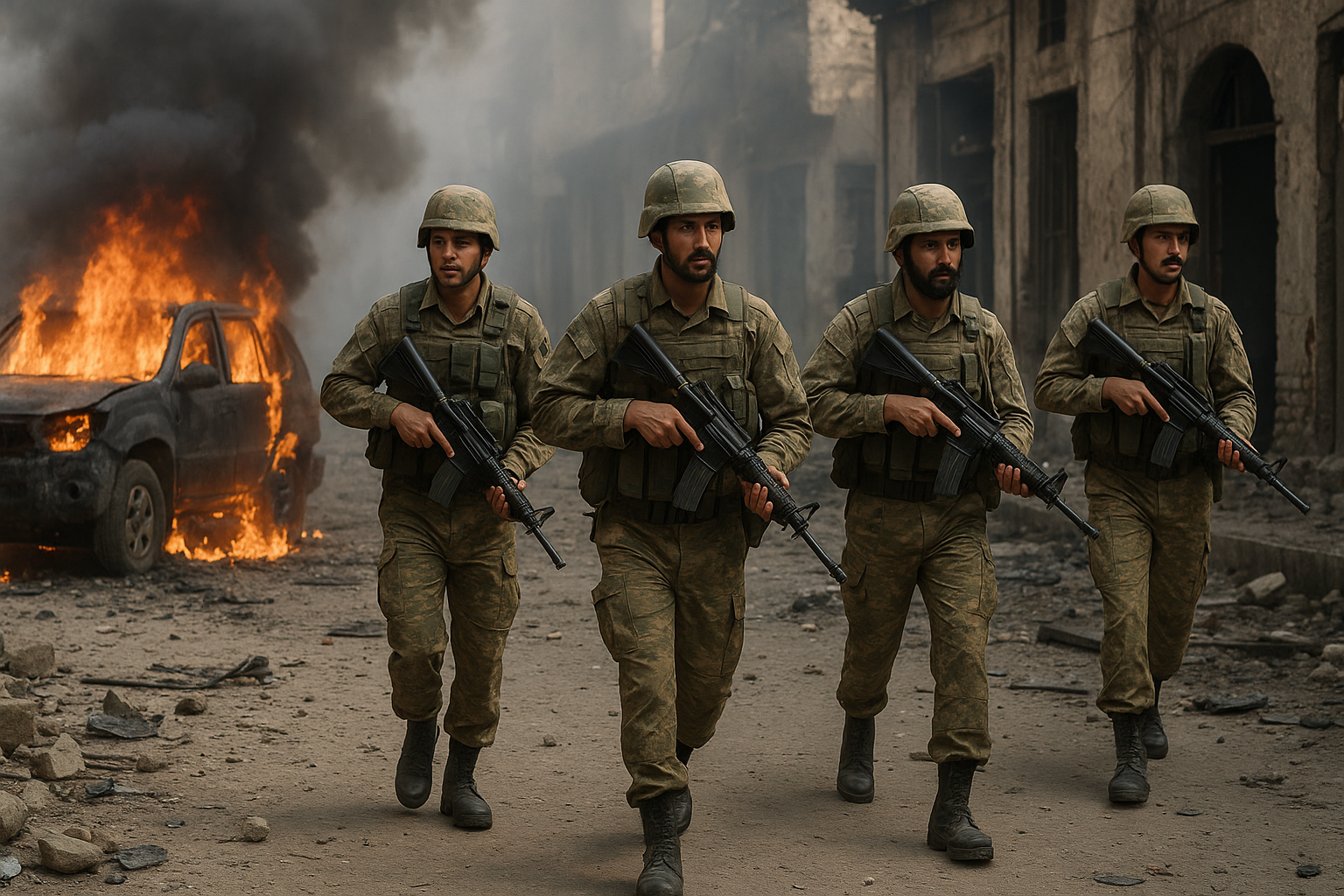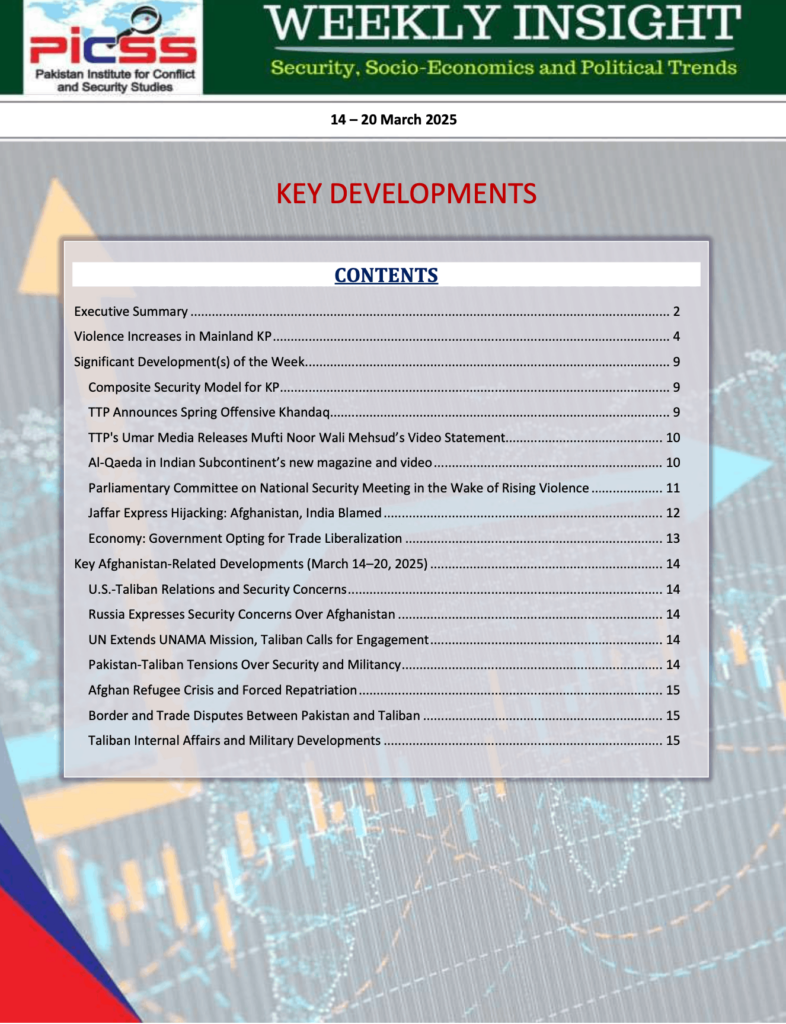
Militant activity in Pakistan surged significantly, with 31 attacks reported—more than double the previous week’s 15 incidents. Despite this, casualties decreased, with 24 people killed (including 12 security personnel and nine militants) and 73 injured, predominantly security forces. Khyber Pakhtunkhwa (KP) experienced the highest number of attacks (21), followed by Balochistan (6) and erstwhile FATA (4). Within KP violence was mainly concentrated in the South. Attack types included tactical assaults, IED explosions, grenade attacks, targeted killings, a vehicle-borne suicide attack, and kidnapping. A high-profile killing of Mufti Shakir, the founder of Lashkar-i-Islam, occurred in Peshawar. Counterterrorism operations resulted in 22 militants being killed, including TTP commanders. In Balochistan, a suicide bombing in Noshki targeted a security convoy, killing five and injuring 40, while other attacks included IED explosions and armed assaults. In erstwhile FATA, police stations, markets, and mosques were targeted, with several injuries reported. Security forces conducted multiple counterterrorism operations across Pakistan, eliminating dozens of militants. In Punjab, a suspected suicide bomber was arrested in Lahore.
The Khyber Pakhtunkhwa (KP) cabinet approved the Composite Security Model (CSM) on March 19, shifting security responsibilities to the police in low-risk districts while the military retains control in volatile areas. Rs 567.7 million has been allocated for police equipment, but the transition may allow militants to expand into previously stable regions. The TTP’s spring offensive further underscores the need to strengthen the police beyond equipment procurement, as the Counter-Terrorism Department (CTD) remains understaffed and lacks specialized training.
On March 15, the Tehrik-e-Taliban Pakistan (TTP) announced Operation Khandaq, a spring offensive employing suicide attacks, ambushes, and laser weapons. The group claims to possess advanced weaponry, raising concerns over NATO arms left in Afghanistan. The Pakistan Institute for Conflict and Security Studies (PICSS) predicts a surge in militant activity, particularly in KP and Balochistan. In response, unofficial security-linked social media accounts have floated “Operation Badar” as a countermeasure, branding the TTP as “Kharijites” to undermine their religious narrative. However, effective countermeasures will require intelligence-driven operations and rapid military responses.
On March 19, TTP’s Umar Media released a video featuring Mufti Noor Wali Mehsud, targeting Pakistan’s security forces rather than the state. He accused them of waging war against KP’s people and urged soldiers to defect. He denied TTP’s involvement in Maulana Hamid ul Haq’s assassination and framed intelligence agencies as politically intrusive. The video was strategically produced, with Noor Wali dressed in Pashtun tribal attire, possibly to appeal to PTM supporters.
The Parliamentary Committee on National Security (PCNS) met on March 19, chaired by Speaker Ayaz Sadiq, and attended by top political and military leaders. The meeting stressed swift implementation of counterterrorism measures under the National Action Plan (NAP) and Operation Azm-i-Istehkam. Army Chief General Asim Munir emphasized governance improvements to prevent Pakistan from being a “soft state.” Political leaders debated Afghanistan’s role in Pakistan’s security crisis, with calls for diplomatic engagement, financial Weekly security report crackdowns on terror networks, and potential cross-border strikes. The military reportedly sought expanded powers for counterterrorism operations.
Pakistan blamed India for sponsoring terrorism after the Jaffar Express hijacking, alleging RAW’s support for TTP and BLA through Afghanistan. The 36-hour operation freed 354 passengers but left 31 dead. Pakistan urged Kabul to act against militants, while Modi’s sudden anti-Pakistan rhetoric and Indian media coverage raised suspicions of a coordinated narrative. Meanwhile, the government agreed to IMF-backed trade liberalization, cutting import tariffs by one-third over five years. While aimed at boosting economic activity, the policy poses challenges for local industries and requires political consensus, with IMF pressure pushing reforms amid Pakistan’s polarized landscape.
The government has agreed to an IMF demand to reduce import tariffs by one-third to 7.1% over five years, focusing on minerals and the auto sector. The policy aims to facilitate a Staff-Level Agreement with the IMF for over $1 billion in assistance, despite an expected Rs 278 billion revenue loss. Regulatory duties will be phased out, marking a shift toward economic liberalization with uncertain long-term effects.
To download complete report with fully charts and graphs please subscribe or login if you are a subscriber.