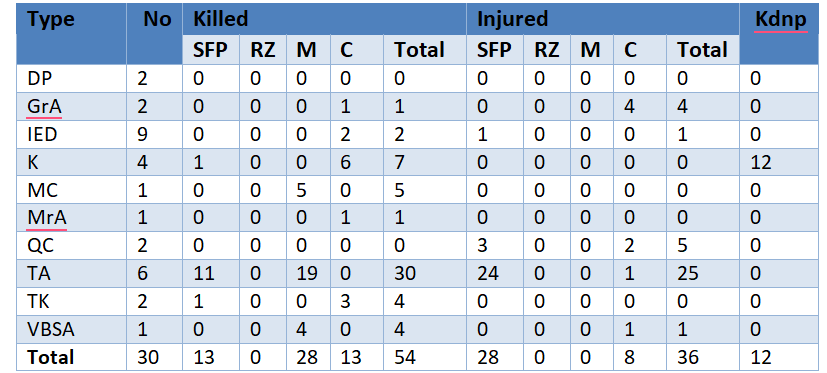
During the reporting period (24–30 July 2026), Pakistan’s security situation remained volatile, with militant attacks increasing slightly from 27 to 30 compared to the previous week. The attacks resulted in 54 fatalities and 36 injuries, marking a sharp rise in casualties despite the modest increase in incidents. Balochistan remained the most affected province, although attacks there declined slightly, while violence increased in Khyber Pakhtunkhwa and the merged tribal districts (erstwhile FATA). Militants employed diverse tactics, including IEDs, targeted killings, quadcopter strikes and attacks on public infrastructure. Meanwhile, security forces maintained an aggressive counterterrorism campaign, conducting 17 operations that killed 83 militants, underscoring the continued intensity of Pakistan’s counterinsurgency efforts.
The security situation in Azad Jammu and Kashmir deteriorated further as authorities adopted an increasingly securitised response to unrest linked to the proscribed Joint Awami Action Committee (JAAC), portraying it as an armed militant network rather than a protest movement. Fresh clashes, allegations of sniper attacks, recovery of sophisticated weapons and claims of foreign backing prompted intensified security operations and restrictions in sensitive areas. While the government argued the crackdown was necessary to safeguard the phased legislative elections, human rights organisations called for independent investigations into the violence and criticised communication blackouts, further fuelling political polarisation.
The first phase of the AJK legislative elections intensified political confrontation, with the PPP alleging widespread electoral irregularities after the PML-N secured a decisive victory in Mirpur division, while the PML-N dismissed the allegations as politically motivated. The controversy, coupled with the unprecedented three-phase polling schedule, PTI’s boycott and recent unrest involving the proscribed JAAC, has reinforced concerns over the credibility of the electoral process and the incoming government’s ability to restore political confidence.
To get access to the complete report, please become a subscriber. For the details of subscription click here