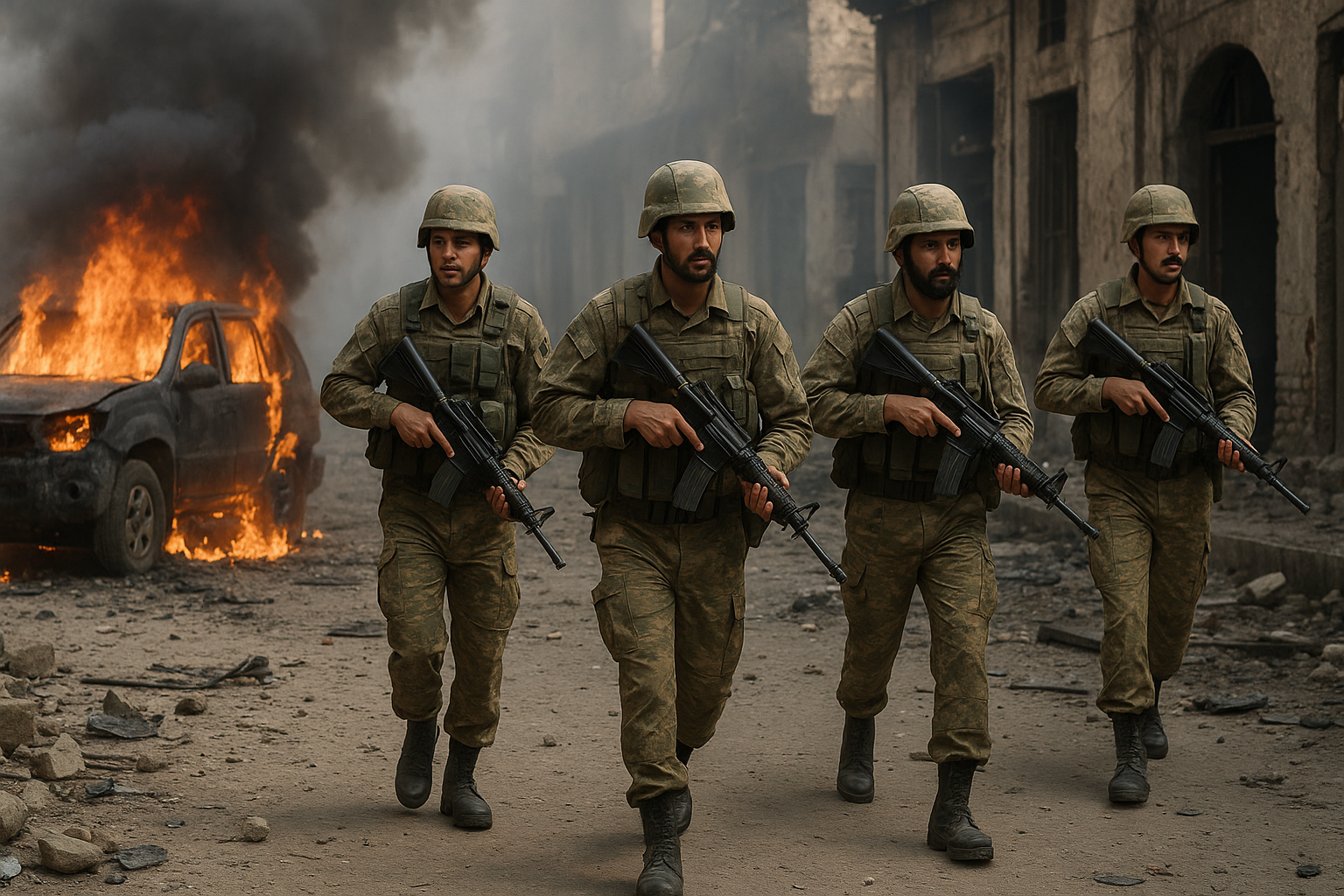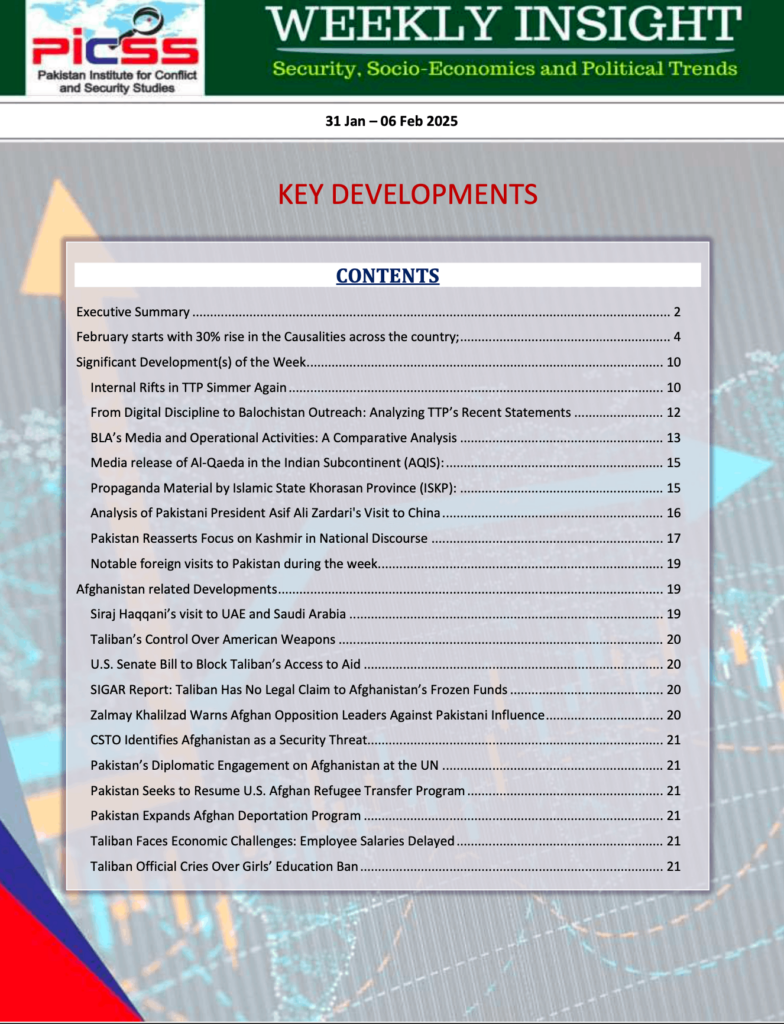
The first week of February 2025 witnessed a 30% surge in casualties across Pakistan, despite a slight decrease in the number of militant attacks. A total of 21 militant attacks were recorded, resulting in 55 fatalities and 21 injuries, compared to 42 deaths and 22 injuries in the previous week. While Khyber Pakhtunkhwa (KP) and Balochistan remained the most affected regions, militant activity was also reported in Punjab and Sindh. Security forces conducted six counter-terrorism operations, eliminating 24 suspected militants.
Tehreek-e-Taliban Pakistan (TTP) faced internal divisions, particularly over the execution of a trader leader in Khyber district, which sparked controversy within the group. Jamaat-ul-Ahrar (JuA) elements openly criticized TTP’s leadership, particularly Mufti Noor Wali, accusing him of abandoning key figures and deviating from the group’s core principles. The TTP leadership also introduced changes in its media strategy, discouraging the use of takfirist terminology, likely as a counter to Pakistan’s branding of TTP as a Kharjite group.
The Harbiyar Marri-led faction of the Balochistan Liberation Army (BLA) conducted a surprise coordinated attack in Manguchar, Kalat, killing 18 Pakistani soldiers. This marked a resurgence for the faction, which was previously considered less active. Meanwhile, the Bashir Zeb-led BLA faction maintained a low-profile media presence, issuing statements on past attacks but claiming responsibility for only three actions.
Al-Qaeda in the Indian Subcontinent (AQIS) released a statement commemorating the death of Hamas military leader Muhammad al-Deif, emphasizing Jihad as essential for the survival of Islam. Meanwhile, ISKP released two propaganda videos, one targeting Iran’s policies in the Muslim world and the other portraying the Taliban as hypocrites who continue global militancy despite pledging non-interference in international conflicts.
Pakistan reasserted the Kashmir issue in national discourse, with Prime Minister Shehbaz Sharif’s visit to Muzaffarabad and COAS General Asim Munir’s participation in Kashmir Solidarity Day activities. The Corps Commanders’ Conference on February 4 also discussed threats from Indian military leadership. Notably, Shehbaz Sharif openly praised Burhan Wani, reflecting a shift towards a more assertive stance on Kashmir.
Pakistani President Asif Ali Zardari’s visit to China (February 4-8, 2025) reinforced bilateral strategic cooperation, with several MoUs signed, including agreements on renewable energy, science and technology, and infrastructure projects under CPEC 2.0. Meetings with President Xi Jinping and Premier Li Qiang underscored Pakistan’s commitment to deeper economic and defense ties with China.
Afghan Interior Minister Sirajuddin Haqqani traveled to the UAE before heading to Saudi Arabia for Umrah, marking a significant diplomatic move following the UN’s temporary lift of his travel ban.
The U.S. Senate introduced the “Stop Funding Global Terrorists Act”, seeking to block any American aid from reaching the Taliban through UN humanitarian programs. Meanwhile, SIGAR reaffirmed that the Taliban has no legal claim to Afghanistan’s frozen reserves, which currently stand at $4 billion.
The Pakistani government approved a new wave of Afghan deportations, targeting undocumented migrants and ACC (Afghan Citizen Card) holders. The UNHCR expressed concerns over the policy, warning that even refugees awaiting resettlement in Western countries might face expulsion.
The Taliban delayed salaries for government employees amid currency fluctuations and a crackdown on foreign exchange markets. Additionally, senior Taliban leader Mohammad Nabi Omari broke down in tears while speaking against the ban on girls’ education, reflecting growing internal dissent over hardline policies.
To download complete report with fully charts and graphs please subscribe or login if you are a subscriber.