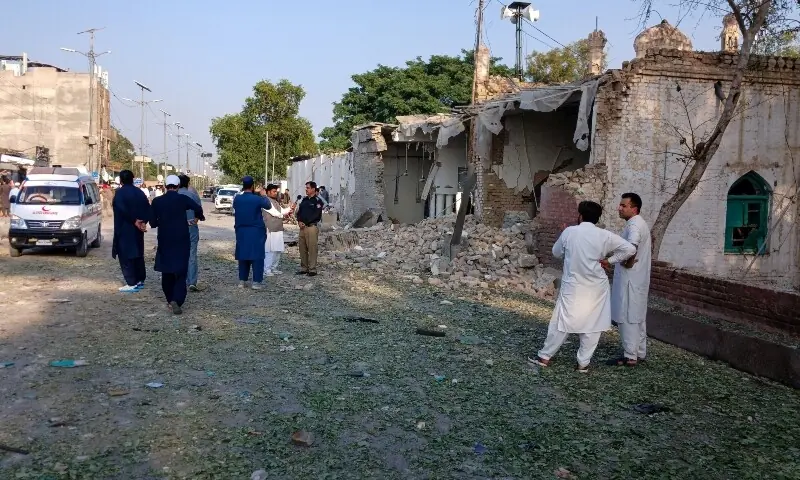
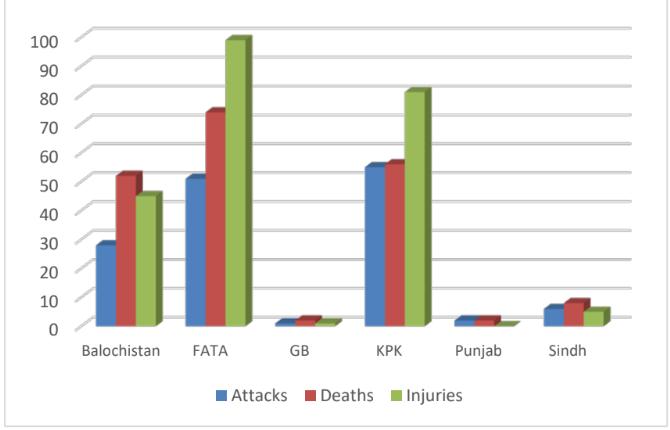
In August 2025, Pakistan experienced its deadliest month of militant violence in more than a decade, recording 143 attacks that killed 194 people and injured 231, with Khyber Pakhtunkhwa and Balochistan bearing the brunt but violence also spreading to Sindh, Punjab, and Gilgit-Baltistan. Militants not only intensified their frequency of attacks but also diversified tactics, with sharp increases in guerrilla assaults, targeted killings, IED and grenade attacks, and even a single suicide bombing, reflecting renewed momentum by the militant groups.
In response, security forces stepped up counterterrorism operations, conducting 41 actions nationwide that killed at least 100 militants and led to 31 arrests. The deadliest operations occurred in Balochistan, where 50 militants, including key BLA and BLF commanders, were eliminated, while intense operations in KP and former FATA killed 48 militants but also resulted in civilian and security casualties. Intelligence-led raids in Sindh, Punjab, AJK, and ICT produced arrests with minimal losses, underscoring a more lethal and proactive security posture amid escalating conflict dynamics.
To pre-empt violence around Independence Day and Nawab Akbar Bugti’s death anniversary, Balochistan authorities suspended mobile internet, restricted travel, and banned gatherings under Section 144. Though criticized for curbing rights, officials argued the measures were essential to counter BLA plots, recalling last year’s deadly assault. CM Sarfaraz Bugti disclosed probes into government employees for militant links and hinted at stronger tactics, but militants’ ability to blend into local populations underscored the province’s complex security environment
Parliament passed amendments to the Anti-Terrorism Act, restoring preventive detention for up to three months and empowering Joint Interrogation Teams to hold suspects on “sufficient grounds.” Supporters cited judicial oversight and a three-year sunset clause, but critics warned of misuse against activists and journalists. Despite controversy, the move expands agencies’ powers and signals a tougher CT posture.
The government also appointed serving army officer Major General Noor Wali Khan as Additional Secretary in the Interior Ministry, replacing a senior police officer. The unusual step aims to enhance coordination among military and civil armed forces during intensified CT operations, though it raises concerns about shrinking civilian oversight.
The relaunch of Operation Sarbakaf in Bajaur displaced over 20,000 families after peace talks with the TTP collapsed. While the campaign regained ground and allowed phased returns, civilian casualties and relief gaps drew criticism. Heavy rains briefly slowed operations, but militants’ regrouping risks persisted, highlighting that military action without governance and rehabilitation cannot secure lasting peace.
In Khyber Pakhtunkhwa, the CTD claimed breakthroughs including foiling Daesh-linked plots and solving high-profile assassinations, reflecting stronger training and capacity. Yet analysts cautioned manpower, funding, and coordination gaps still limit sustainability, stressing the need for judicial reforms and a whole-of-government approach. The demolition of Madni Mosque in Islamabad triggered protests by JUI-F and allied groups, with clerics threatening civil disobedience and Lal Masjid’s Abdul Aziz calling for jihad. The government reversed course and pledged to rebuild the mosque, a move critics saw as capitulation. The episode highlighted the risks of poorly timed actions involving religious sites. The Human Rights Commission of Pakistan reported rising violence and discrimination against minorities, including killings, demolitions, forced conversions, and police complicity in blasphemy cases. While some reforms such as the Child Marriage Restraint Act and CVE centres were noted, HRCP urged an independent minorities commission, seminary oversight, and inquiry into blasphemy entrapment, warning extremist groups are tightening their hold. The economy showed modest recovery as Moody’s upgraded Pakistan’s credit rating to Caa1, citing IMF-led stabilization, higher revenues, and easing debt costs. Yet reserves remain insufficient for repayments, security issues deter FDI, and inflation persists. Steps like the Pakistan Digital Authority, resilient banking, and agricultural recovery provided positives, but climate shocks remain a looming risk.
The Pakistan Land Port Authority Act established a statutory body to regulate land crossings and curb smuggling. While promising, its success depends on resources and infrastructure upgrades. Meanwhile, prolonged trade protests in Gilgit-Baltistan over taxation and Khunjerab disruptions deepened mistrust after clashes with police, threatening CPEC’s northern artery. Military modernization advanced with the creation of the Army Rocket Force Command, induction of Chinese Z-10ME attack helicopters, and launch of the third Hangor- class submarine, reflecting capability upgrades and reliance on China amid regional competition. Politics remained volatile as PTI protests over Imran Khan’s arrest failed to gain broad traction despite rallies and KP support. The ECP disqualified nine lawmakers, while courts jailed senior leaders. Backchannel talks exposed rifts between hawks favoring confrontation and moderates seeking reconciliation. TTAP pressed a reform agenda, but limited traction persisted. While the government hinted at reconciliation conditioned on “repentance,” Khan doubled down, banking on Western scrutiny.
Relations with Afghanistan remained tense as Pakistan advanced Afghan repatriations, drawing condemnation from Kabul and UNHCR. Drone strikes in Nangarhar and Khost killed 50 Afghans, worsening mistrust. Yet Islamabad is unlikely to sever ties, instead keeping the Taliban engaged on trade while pressing CT issues via multilateral forums and continuing unclaimed cross-border strikes. Pakistan–U.S. relations improved with high-level exchanges, trade initiatives, and CT cooperation, including Washington’s designation of the BLA and its Majeed Brigade as terrorist entities, fulfilling a long-standing Pakistani demand. The renewed partnership blends CT collaboration with broader economic engagement.Tensions with India persisted amid Kashmir protests, Indo-Israeli defense cooperation claims, water disputes, and competing deterrence developments. Pakistan’s Rocket Force and India’s Agni-V tests reinforced military signaling, while water issues remain central in the wake of recent floods. Iranian President Pezeshkian’s visit yielded pledges on trade and cross-border militancy, though sanctions and logistics hinder progress. The timing, overlapping with COAS Munir’s Washington trip, underscored Islamabad’s balancing act. Similarly, Pakistan–China ties deepened with strategic dialogues, defense milestones, and preparations for PM Shehbaz’s SCO trip, reaffirming Beijing’s anchor role despite warming U.S. ties. Pakistan–Bangladesh relations gained momentum as FM Dar’s Dhaka visit produced agreements on visas, training, media, and trade. Post-Hasina shifts eased Dhaka’s tilt toward India, creating new space for pragmatic engagement, though sustainability will depend on Bangladesh’s domestic trajectory.
To get access to the complete report please become a subscriber. For the details of subscription please Click Here