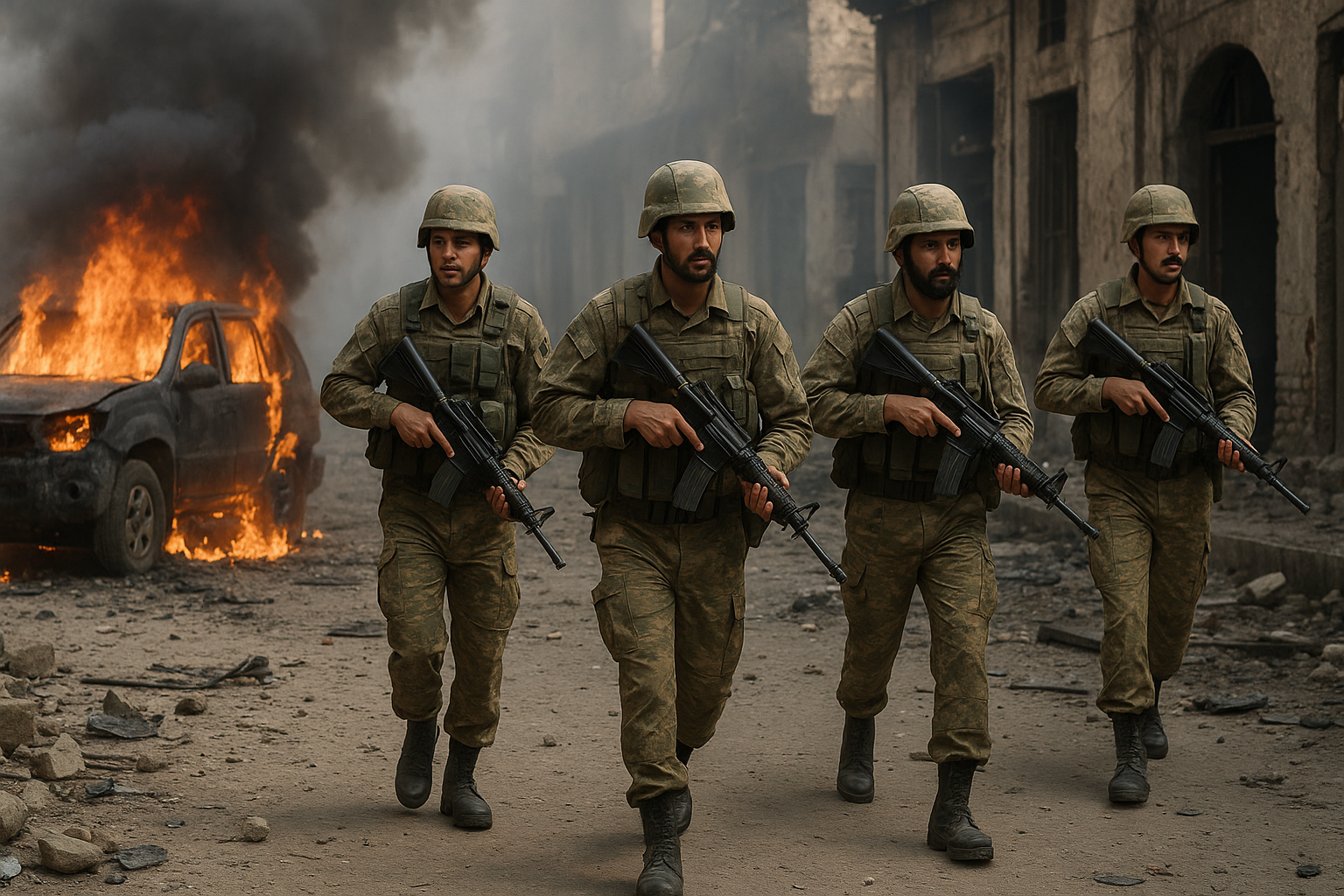
During the week 22 attacks were recorded nationwide resulting in 24 fatalities and eight
injuries. KP witnessed 14 attacks that caused 18 deaths and seven injuries, erstwhile FATA six
attacks leading to four fatalities and one injury, while Balochistan reported two incidents
resulting in one civilian death. Targeted killings remained the dominant tactic, alongside IED
attacks and tactical assaults. On the counterterrorism front, security forces sustained
operational momentum by conducting 12 operations nationwide, killing 40 militants and
arresting three others. Most of these actions were concentrated in KP and erstwhile FATA,
underscoring continued pressure on militant networks despite ongoing attacks.
Preparations for a targeted security operation in the Tirah Valley of Khyber district have
triggered large-scale displacement, with evacuations from the Maidan area beginning around
10 January and potentially affecting 15,000–20,000 families. Authorities announced a
compensation and relief package and described the operation as limited in scope and duration,
with rehabilitation expected by April. Notably, local sentiment has shifted against militants, as
prolonged insecurity, extortion, and failed jirgas have eroded tolerance for armed groups.
However, the operation has become politically contentious, reflecting widening rifts between
the KP provincial leadership and federal security institutions. Chief Minister Sohail Afridi
publicly rejected claims of an operation and forced evacuation, alleging political manipulation,
while security sources maintained that evacuations were agreed through tribal jirgas and
coordinated with the KP government. Overall, competing narratives, mixed messaging, and the
absence of political consensus are undermining counterterrorism coherence at a sensitive
moment, with implications for both operational effectiveness and public trust.
Pakistan’s renewed push toward export-led growth has highlighted deep structural
constraints on competitiveness, as identified by a high-level committee led by Planning Minister
Ahsan Iqbal. High energy tariffs, distorted taxation, policy unpredictability, and weak trade
facilitation continue to suppress exports, which remain well below potential. While initiatives
such as the Uraan Pakistan plan and recent investor inflows signal intent, senior
officials—including Finance Minister Muhammad Aurangzeb—acknowledge that without
reforms in energy pricing, taxation, and SOE efficiency, growth gains will remain fragile.
Exploratory steps into digital finance, including the USD1 stablecoin MoU, reflect openness to
innovation, but the economic strategy stands at a critical inflection point where reform depth
will determine whether reliance on the IMF can be reduced.
Growing interest in the JF-17 Thunder fighter aircraft reflects Pakistan’s gradual
emergence as a mid-tier defence exporter. Prospective buyers, including Indonesia,
Bangladesh, Iraq, and Saudi Arabia, alongside existing operators such as Azerbaijan, indicate
demand for cost-effective, non-Western alternatives. With pricing estimated at USD 40–50
million and full Chinese alignment on exports, the JF-17 is evolving into a commercially viable
asset. However, while defence exports offer economic and strategic dividends, they require
sustained investment and represent a long-term growth pathway rather than an immediate
solution.
At the political level, a sharp confrontation has emerged between the KP leadership and
the federal government over the counterterrorism narrative, following Chief Minister Afridi’s
questioning of claims that Afghan soil is used for attacks against Pakistan. Federal ministers
responded forcefully, warning against political ambiguity and accusing the KP government of
weakening counterterrorism efforts through mixed messaging. Legal scrutiny of the chief
minister linked to earlier militant violence, alongside broader opposition mobilisation on
constitutional grounds, has further intensified pressure. Collectively, these developments point
to a widening civil–political rift that risks blurring the line between legitimate political debate
and core security imperatives, undermining counterterrorism unity and economic stability.
On the external front, Pakistan–Indonesia defence ties have progressed from symbolism
toward structured cooperation following high-level meetings with Pakistan’s military
leadership. Building on President Prabowo Subianto’s December 2025 visit, discussions focused
on training, institutional linkages, and defence-industrial collaboration. Reports of advanced
talks on Indonesia’s potential acquisition of up to 40 JF-17 aircraft, along with drones and air-
defence systems, point to Pakistan’s most significant defence export opportunity in Southeast
Asia, offering supplier diversification for Indonesia and strategic depth for Pakistan.
Reports of Türkiye’s possible entry into a Saudi Arabia–Pakistan defence arrangement
suggest the gradual emergence of a new regional security framework. The proposed alignment
leverages complementary strengths and reflects shared concerns over reliance on Western
security guarantees. Although discussions remain ongoing, incremental movement toward a
trilateral framework signals a shift toward indigenous, non-Western security mechanisms with
potential implications for regional power balances.
The US decision to suspend immigrant visa processing for Pakistan and 74 other
countries marks a tightening of Washington’s merit-based, security-centric immigration policy
under President Donald Trump. Framed as an enforcement measure linked to vetting and
public-charge concerns, the freeze functions as a de facto economic filter. For Pakistan, it
threatens to disrupt education, employment, and family reunification pathways, while
Islamabad’s muted response suggests caution to avoid diplomatic friction. The move reflects a
broader trend of using immigration controls as leverage in bilateral relations.
Pakistan has also reiterated its opposition to escalation involving Iran, emphasising
diplomacy, sovereignty, and international law amid rising regional tensions. Islamabad’s stance
reflects concern over spillover effects into Balochistan, including militancy, refugee flows, and
economic disruption. By publicly rejecting disinformation about Pakistani support for US or
Israeli actions against Iran, Pakistan has sought to maintain neutrality and avoid entanglement,
underscoring a realist strategy focused on regional stability.
Pakistan–Afghanistan relations remain strained by unresolved security concerns,
particularly militancy emanating from Afghan soil, despite continued diplomatic engagement.
Trade has declined sharply amid border closures, while large-scale repatriation of Afghan
nationals has added humanitarian and political pressure. Divergent political messaging within
Pakistan has further complicated the security narrative. In the absence of verifiable security
assurances, economic decoupling and border instability are likely to deepen, although tentative
behind-the-scenes facilitation—reportedly involving Saudi Arabia—suggests limited but
potentially meaningful diplomatic movement.
To get access to the complete report please become a subscriber. For the details of subscription please Click Here