
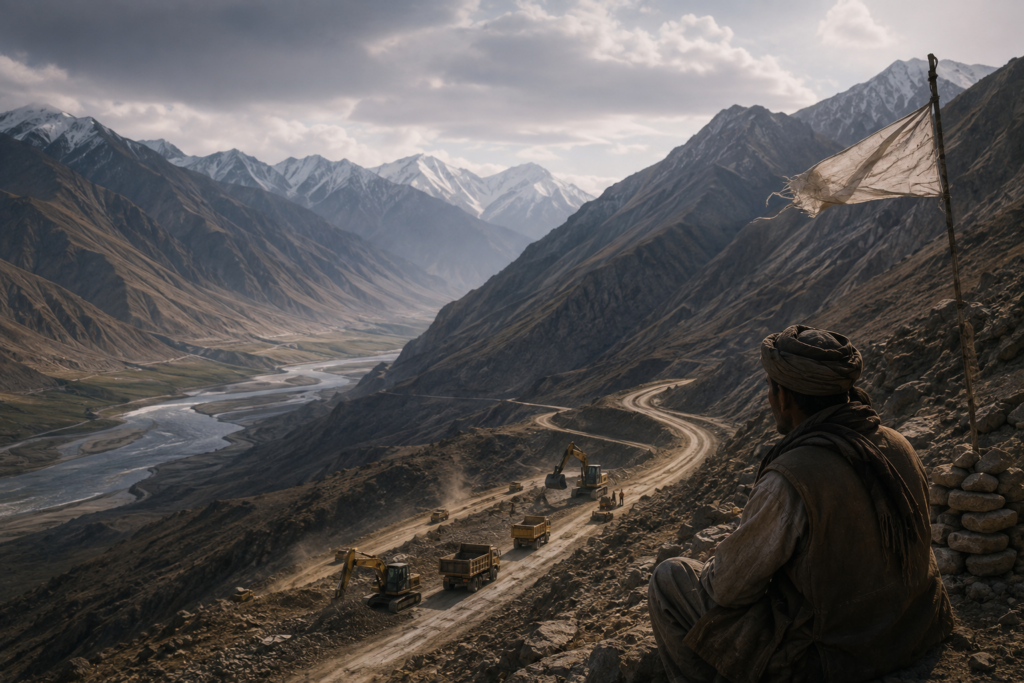

The sharp deterioration of security in Afghanistan’s northeastern Badakhshan province in recent months should ring alarm bells in Beijing. What was once a relatively peripheral concern is rapidly becoming a direct challenge to China’s core interests: the security of its Xinjiang frontier, the viability of a long-discussed land link through the Wakhan Corridor, and the safety of Chinese personnel and investments already present in the region.
Since mid-July 2026, Badakhshan has witnessed sustained anti-Taliban operations by groups including the Afghanistan Freedom Front and the newly active Sipahiyan-e Mihan. These have included the temporary seizure of the Yaftal-e Payeen district centre—the first such loss of a district headquarters by the Taliban since 2021—and multi-day fighting in Zebak district that produced significant reported casualties. The Islamic State Khorasan Province (ISKP) has also struck, assassinating the province’s director of information and culture. Internal Taliban frictions over gold mines, the disarmament of local commanders, and the deployment of predominantly Pashtun reinforcements into a Tajik-majority province have compounded the volatility. The result is a province slipping toward contested, if not ungovernable, spaces along China’s shortest land border with Afghanistan.
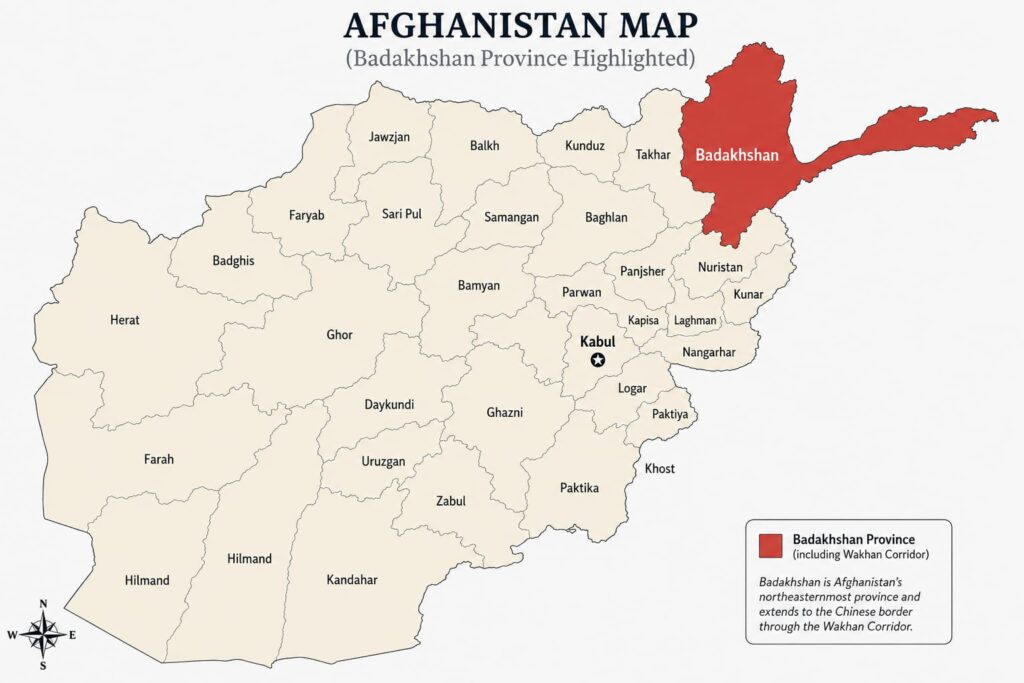
This instability directly threatens the Wakhan Corridor road project that the Taliban have been advancing for several years. Afghan authorities claim substantial progress, with gravel work on sections of the roughly 120-kilometre route reported at 70–75 percent complete by mid-2026 and preliminary construction reaching the border zone. The corridor has long been promoted as a potential alternative or complementary artery to the China-Pakistan Economic Corridor (CPEC), offering China a direct overland connection that bypasses Pakistan’s more turbulent routes and opens access to Afghan minerals and Central Asian markets. China’s creation of Cenling County in early 2026 along the border appears to reflect preparatory administrative steps for eventual connectivity.
Yet a deteriorating security environment in Badakhshan risks turning this nascent route into a liability from the outset. Any sustained presence of armed opposition or extremist groups in the high valleys would make commercial traffic, construction, and border management prohibitively risky. Beijing has already shown caution: it has declined to open formal customs facilities or commit major capital to the corridor, prioritising security guarantees over rapid economic opening. Escalating violence only reinforces that reticence and raises the prospect that an alternative to CPEC could be stillborn.
Compounding these concerns is the historic presence of Uyghur militants associated with the East Turkestan Islamic Movement (ETIM), also known as the Turkistan Islamic Party, in Badakhshan. For years the province served as a key rear base for these fighters near the Chinese border. Under pressure from Beijing after 2021, the Taliban relocated many of them southward. However, residual networks, reports of limited returns or redeployments, and the attraction of ungoverned spaces remain live risks. More troubling still is the evidence that Uyghur fighters have been courted by, and in some cases defected to, ISKP. The latter has explicitly framed itself as a champion of Uyghur grievances against China, claimed attacks on Chinese nationals and interests, and used anti-China messaging to recruit. Should Badakhshan’s current disorder create durable sanctuaries, the combination of ETIM remnants and ISKP’s Uyghur cadres would place a direct terrorist threat on China’s doorstep—exactly the scenario Beijing has spent two decades seeking to prevent.
Chinese economic stakes already on the ground amplify the exposure. Multiple Chinese firms are active in gold extraction across Badakhshan districts such as Shahr-e Buzurg, Raghistan, and others, often operating alongside Taliban-linked networks. Preliminary surveys for hydropower projects, including a potential dam in Jurm district with Chinese participation, have also taken place. These activities sit within a broader pattern of Chinese commercial interest in Afghan minerals. Yet the same province has been the launch point for cross-border attacks into Tajikistan that killed Chinese workers on China Road and Bridge Corporation projects and gold-mining sites. Evacuation advisories and heightened Chinese security demands have already followed such incidents. Expanding disorder in Badakhshan would endanger existing personnel, deter further investment, and undermine the narrative of Afghanistan as a stable partner for Belt and Road connectivity.
For Beijing, the implications are strategic rather than merely tactical. A chronically unstable Badakhshan threatens the integrity of the Xinjiang frontier, complicates any future trade corridor, and raises the cost of protecting Chinese nationals and assets. It also tests the limits of the Taliban’s ability—or willingness—to deliver the security assurances that have underpinned China’s pragmatic engagement since 2021. While the Taliban retain overall control of Afghanistan and have shown they can temporarily suppress particular groups, the confluence of ethnic resistance, resource rivalries, and opportunistic extremist infiltration in a province that borders China is qualitatively different from isolated incidents elsewhere.
China has consistently prioritised a “security first” approach in Afghanistan. The current trajectory in Badakhshan suggests that approach is being tested more severely than at any point since the Taliban’s return to power. Without a decisive improvement in local control and the elimination of spaces usable by anti-China militants, both the promise of the Wakhan link and the broader economic relationship risk being constrained by the very instability they were meant to help overcome. Beijing’s interests are now directly engaged; the question is whether the Taliban can still deliver the stability required to protect them.